
About the SkinRAI Consortium
The Skin and Responsible AI Consortium (SkinRAI) is an independent, clinically led initiative established by the British Association of Dermatologists. The consortium is building the evidence, standards, data assets, and assurance capability needed to support responsible use of artificial intelligence in dermatology. Its work aims to help ensure AI tools are assessed across different skin conditions, patient populations, and clinical settings, so that evidence reflects the people and clinical pathways where these technologies may be used.
Why SkinRAI is needed
AI has the potential to support dermatology services, but its value depends on more than technical performance. Tools need to be evaluated in relation to real clinical pathways, diverse patient populations, service needs, safety requirements, and the practical conditions in which they may be used.
Decisions about dermatology AI should be based on robust evidence, clinical relevance, patient benefit, fairness, safety, cost effectiveness and real-world performance.
What SkinRAI is building
SkinRAI is developing shared infrastructure for dermatology AI. This includes:
practical guidance on using dermatology data responsibly
a national dermatology AI dataset for testing tools against real-world clinical data
independent methods for testing how well AI tools work
processes to help judge whether AI tools are safe, fair, effective, and useful
Together, these resources are intended to support more consistent assessment of AI technologies and improve the quality of evidence available to clinicians, NHS organisations, researchers, innovators, and decision-makers.
Adopting with confidence
A central part of SkinRAI’s work is assurance. In this context, assurance means looking beyond whether an AI tool works in principle. It means asking whether the tool is appropriate for the patients, pathways, and settings where it may be used.
This includes considering how the AI tool performs in real-world dermatology services, whether it works fairly across different patient groups, what evidence supports its use, what its limitations are, and what safeguards are needed before and after deployment.
Currently, there is little opportunity for NHS services to independently assess AI tools they are looking to adopt.
How the consortium works
The consortium provides a neutral, independent route for innovators, clinicians, patients, NHS organisations, researchers, and regulatory experts to engage around shared questions about dermatology AI.
This helps innovators understand real healthcare needs, evidence expectations, and the conditions required for responsible evaluation. It helps NHS organisations and clinicians assess emerging technologies more consistently. It helps patients and public contributors shape the discussion about trust, fairness, safety, and patient benefit.
By bringing these perspectives together, SkinRAI aims to support dermatology AI that is better aligned with clinical pathways, patient needs, and the evidence required for safe and effective use.
Our aim
By building national capability for dermatology AI assurance, SkinRAI aims to support responsible innovation while protecting patients and maintaining clinical confidence.
Its ambition is to help create a healthier AI ecosystem for dermatology: one where useful technologies can be evaluated properly, evidence can be interpreted consistently, and adoption decisions are grounded in patient and service benefit.
Meet the Team
-

Simon Morrison
CHAIR, STRATEGIC BOARD
-

Dr Rubeta Matin
CLINICAL DIRECTOR
-
Professor Colin Morton
STRATEGIC ADVISOR
-
Helen Donald-Simpson
PROGRAMME MANAGER
-

Matt Gass
COMMUNICATIONS AND EXTERNAL AFFAIRS LEAD
-
Tania von Hospenthal
CLINICAL SERVICE LEAD
Our model
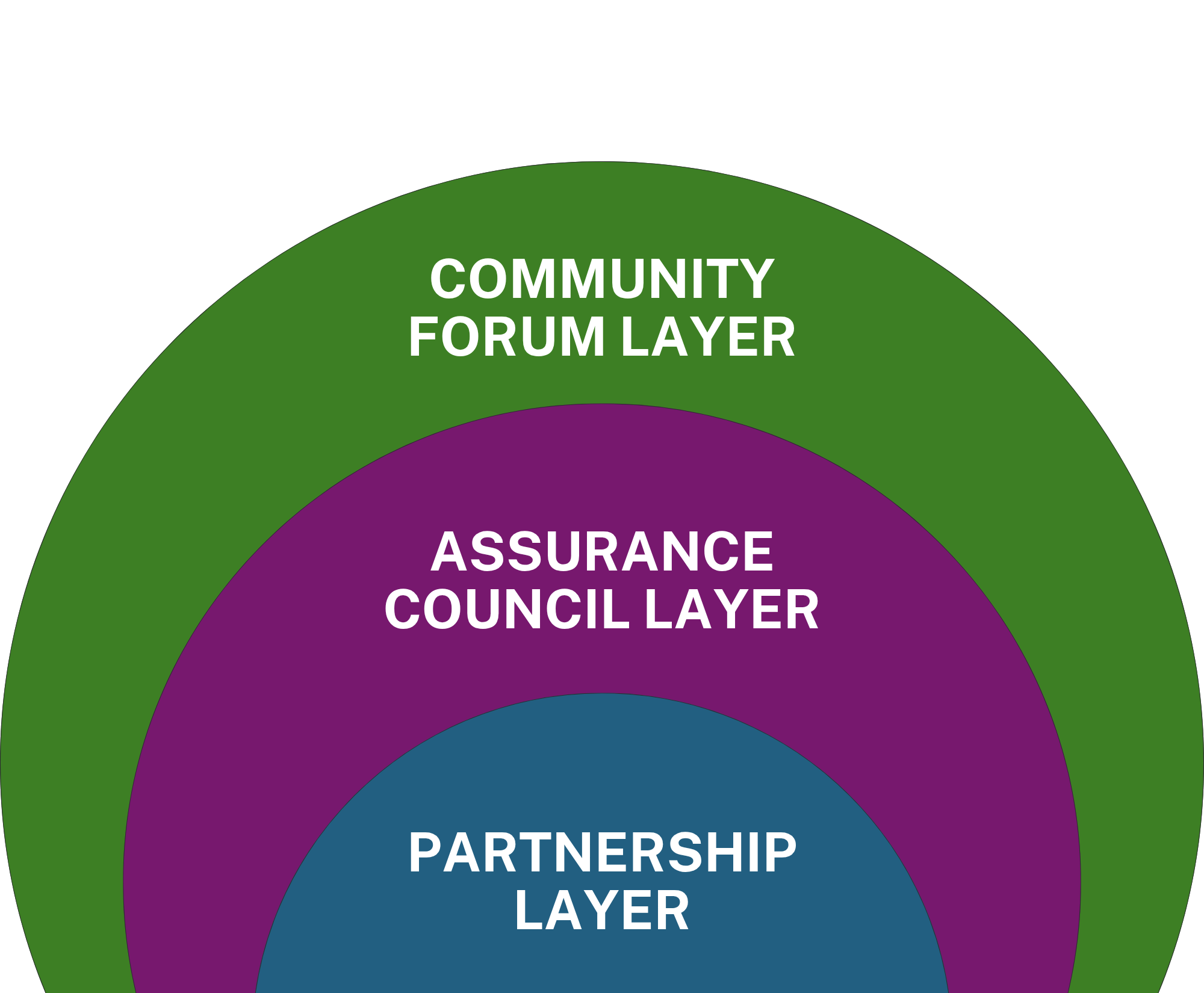
Community forum
A forum for patients, clinicians, dermatology professionals, researchers, technology specialists, and wider stakeholders with an interest in responsible AI in dermatology. The forum will help shape future opportunities, provide feedback, and support wider engagement with the Consortium’s work.
Assurance council
Membership based on expertise and capacity to contribute to the development of Consortium outputs and assets. The council will develop and manage assurance methods, practical guidance, and other Consortium outputs.
Partnership layer
Provides stewardship of the Consortium’s assets. Partners will set strategic direction, provide and secure resources, and identify and admit new partners.
Your questions, answered
-
SkinRAI is relevant to clinicians, researchers, NHS organisations, regulators, patient representatives, data specialists, industry developers, funders, and others with expertise or interest in responsible diagnostic AI in dermatology. Different routes for involvement will reflect different levels of expertise, capacity, and contribution. More information about our model is available above.
-
SkinRAI’s initial focus is diagnostic AI in dermatology, particularly AI tools that use skin images and related clinical data to support assessment, triage, or diagnosis. The Consortium may consider other forms of AI used in dermatology in future.
-
Patients and public contributors will help shape the Consortium’s priorities, provide feedback, and support discussion about trust, fairness, transparency, and patient benefit. Their involvement is crucial because AI tools affect patient care, patient experience, and confidence in dermatology services.
-
An important aspect of the SkinRAI Consortium is that it brings together a wide range of expertise, including from those involved in developing AI technologies. However, independence and a solution-agnostic approach are founding principles of the Consortium.
By bringing industry, clinical, NHS, patient, research, and regulatory perspectives together, SkinRAI aims to support the development of AI solutions that fit real NHS dermatology pathways, rather than requiring services to adapt around individual tools. This means focusing on clinical need, patient benefit, workflow, safety, evidence, and practical implementation from the outset.
-
No. SkinRAI is not developing a diagnostic AI product. Its role is to develop the shared data, methods, standards, and evaluation capability needed to test and understand AI tools developed by others.
-
No. SkinRAI has no power to provide any form of regulatory approval, or similar. Its work is intended to help the NHS and other relevant bodies independently evaluate AI tools in dermatology to help them make informed decisions on the adoption of specific tools in specific pathways.
-
SkinRAI will support the development of a federated national dermatology AI data asset by establishing the standards, governance frameworks, and technical requirements needed to collect, curate, link, and evaluate dermatology data consistently across the UK.
The federated nature of this data asset means that data would remain held within existing secure systems, rather than being moved into a single central database controlled by SkinRAI. The Consortium will work with NHS organisations, Secure Data Environments, Trusted Research Environments, and equivalent secure research infrastructure across the UK to enable high-quality dermatology data to be collected, linked, accessed, and analysed safely through agreed governance and access arrangements.
A key challenge facing dermatology AI is that data is often fragmented across organisations, collected using different standards, and difficult to access for evaluation and research. SkinRAI will help address these barriers by developing common approaches to image quality, metadata, labelling, clinical context, and data standards, creating a more consistent foundation for AI evaluation.
SkinRAI will also help steward access to this national capability by developing governance, permissions, and access frameworks that support responsible use of data while protecting patient privacy, maintaining public trust, and ensuring appropriate oversight.
Over time, this approach will create a federated national dermatology AI data asset that reflects real patients, real-world dermatology pathways, and diverse populations across the UK. By enabling independent evaluation, it will support fair and effective AI development and give healthcare systems greater confidence when assessing whether AI tools are safe, effective, and useful in practice.
-
SkinRAI will support the development of a national dermatology AI data capability by setting guidance and standards for how dermatology data should be collected, structured, labelled, and prepared for evaluating diagnostic AI tools.
The Consortium will not control patient data or operate a central data store. Instead, its role is to help NHS organisations and existing secure research data platforms become ready to collect high-quality dermatology data in a consistent and governed way.
In practice, this means supporting NHS trusts to build data pipelines into secure research data platforms, formally known as Secure Data Environments. These highly protected platforms allow approved researchers to analyse sensitive NHS patient data without the data leaving the environment.
SkinRAI’s work will focus on the practical requirements needed to make dermatology data useful for AI evaluation. This includes guidance on image quality, metadata, labelling, clinical context, data standards, governance, permissions, and safe access arrangements.
The aim is to create the conditions for a trusted national dermatology AI data asset over time. This would not be a single database controlled by SkinRAI. It would be a coordinated, standards-based approach that helps NHS organisations and secure research data platforms collect data that reflects real patients, real dermatology pathways, and the evidence needed to assess whether diagnostic AI tools are safe, fair, effective, and useful.
-
SkinRAI is led and supported by the British Association of Dermatologists. This reflects the BAD’s role as the professional membership body for dermatologists in the UK and its interest in supporting safe, evidence-based innovation in dermatology.